
The Takaichi Mandate: Translating Popularity into Political Capital
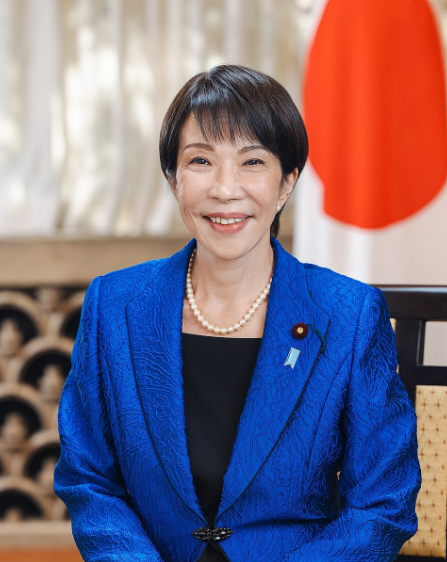
Elected as Prime Minister in October of 2025, Sanae Takaichi’s ascendance to Japan’s highest political office represents a marked shift in Japan’s political trajectory. As Japan’s first female Prime Minister, many – including her own conservative base – questioned whether she would be able to successfully lead given Japan’s historically patriarchal society. However, after just four months in office, Takaichi’s approval rating sits at around 70%, a figure amongst the highest since polling of Japanese cabinets began. Initially, this popularity stood in contrast to the declining public image of her Liberal Democratic Party (LDP), which has faced a series of scandals in recent years, including the “slush fund” scandal and the party’s connections to the Unification Church. However, Takaichi has managed to translate her personal popularity into electoral success, with the LDP expanding its number of Lower House seats from 198 to 316.
Considering the LDP’s recent reputational damage, Takaichi’s ability to deliver such a landmark success for her party so early in her term is almost astounding. By converting her personal approval into a supermajority for her party, Takaichi has secured the institutional capacity to pursue policy initiatives that would not be possible without sustained legislative backing. This snap election demonstrates that Takaichi’s approval is not a byproduct of the “honeymoon” effect, but rather a durable political mandate. As with many Western countries, Japan is in the midst of a rightward political shift, a shift that Takaichi’s rhetoric has embodied in both her campaign and the early stages of her leadership. Having rapidly consolidated support, the significance of Takaichi’s meteoric rise lies in its source. Takaichi has taken a three-pronged approach to accruing political capital, aligning her rhetoric and policy agenda with widespread concerns over security, cultural preservation, and economic direction.
National Security, Military Expansion, and the China Question
Perhaps the most significant driver of Takaichi’s public appeal is her stance on national security. Despite the profound economic interdependence between Tokyo and Beijing, with China being Japan’s largest trading partner, there exists great Japanese public concern regarding China’s military assertiveness. These concerns have been exacerbated in recent years, with territorial disputes in the East China Sea, increased Chinese naval activity near the Senkaku Islands, and escalating tensions over Taiwan all contributing to heightened public concern. A recent survey run by the government of Japan found that 68% of respondents see China’s growing military power as the country’s top security concern. Additionally, polls show a strong Japanese public affinity for Taiwan, with a recent survey finding that 74.5% of Japanese felt a sense of closeness toward Taiwan.
Despite the widespread public concern regarding China and affinity for Taiwan, Japan’s military capacity is constrained by its post-World War II constitutional framework. Written during the American occupation of Japan following World War II, the 1946 constitution, specifically Article 9, renounces war and severely restricts the scale of the country’s armed forces. As of today, this document stands as the world’s oldest unamended constitution, and, with regional security concerns intensifying, the document has become a central topic of political debate. While a 2015 security statute partially expanded military capabilities by permitting collective self-defense in “existential crisis” situations, the underlying constitutional restrictions remain politically significant.
| Article 9. Aspiring sincerely to an international peace based on justice and order, the Japanese people forever renounce war as a sovereign right of the nation and the threat or use of force as means of settling international disputes. In order to accomplish the aim of the preceding paragraph, land, sea, and air forces, as well as other war potential, will never be maintained. The right of belligerency of the state will not be recognized. |
Recognizing the limitations that Article 9 places on Japan’s military, Takaichi has long called for its amendment. However, the constitutional amendment process requires a two-thirds majority in both houses of the Diet, and snap elections apply only to the House of Representatives, not the House of Councillors, where the LDP still lacks a majority. Thus, Takaichi’s ability to amend Article 9 has been limited, forcing her to take alternative steps to project military strength. Notably, in November of 2025, Takaichi stated that “if China invades Taiwan by warships, it will likely be regarded as an existential crisis situation for Japan,” suggesting that a Chinese attack on Taiwan would justify the use of Self-Defense forces. While this rhetoric has further strained Japan’s already fragile diplomatic relationship with China, it has enthused Takaichi’s conservative base, fortifying public support by signalling a willingness to confront perceived regional threats.
Immigration, National Identity, and the Pursuit of Social Cohesion
Domestically, Takaichi has also espoused conservative values on immigration and national identity, issues which have intensified given Japan’s ongoing demographic crisis. The country’s working-age population has dropped by roughly 15% over the last 30 years, and projections from Oxford Economics suggest that for Japan to stabilize its workforce by the 2040s, it would have to accept 500,000 foreign workers per year. Despite Japan’s dire economic position, demographic pressure has not resulted in a political consensus in favor of increased migration. In fact, with Japanese foreign residents reaching a record 3.8 million at the end of 2024, far-right parties, like Sanseito, a nationalist “Japanese First” party founded in 2020, have gained significant electoral traction by emphasising immigration and cultural cohesion.
Takaichi’s campaign and early policy proposals have reflected national concern over rising immigration and its impact on social cohesion. During her campaign, Takaichi took a hard stance against foreigners; a stance epitomized by her claim that ‘in Nara Park, foreign tourists have been kicking and beating deer,’ which drew media criticism for a lack of solid evidence. Her government has also announced plans to develop more restrictive policies on foreign nationals, including immigration caps and limitations on foreign land purchases. These proposals align with prevailing public sentiment and are a significant contributor to her high approval ratings, with a recent survey finding that 66% of respondents welcomed such policies, compared to only 24% who expressed concern. By addressing demographic pressure through the language of cohesion and control, Takaichi’s hardline stance has reassured voters that Japan’s national identity will be preserved, a critical factor in her widespread support.
Echoes of the Past: Bringing Back Right-Wing Supply-Side Economics
Finally, as a protege of Shinzo Abe, Takaichi’s economic platform benefits from immediate credibility among voters who associate “Abenomics” with stability and growth. Within her first months in office, Takaichi pushed through a record supplementary budget and proposed tax reductions, a shift she described as “proactive fiscal policy” intended to break Japan’s long deflationary cycle. Additionally, Takaichi has paired these policies with accelerated defense spending and significant state-led investment in strategic sectors such as artificial intelligence and semiconductor manufacturing, linking economic policy to the aforementioned national security priorities.
While Takaichi has benefited from her ties to Abe, her economic approach marks a subtle yet distinctive departure from earlier forms of Abenomics in its emphasis on economic security. While Abe’s policies were primarily designed to revive domestic demand and end stagflation through monetary easing and fiscal stimulus, Takaichi’s investments in semiconductors, artificial intelligence, and defense capacity are not only intended to stimulate aggregate growth, but also to reduce dependence on foreign supply chains, particularly those linked to China.
These policies have produced mixed reactions across equity and debt markets. Japanese equity indexes, like the Nikkei 225, have reached record highs, supported by strong corporate earnings and a weaker yen that has boosted exports. Concurrently, debt investors remain skeptical, as proposals to reduce consumption taxes and expand fiscal spending raise investor concerns about Japan’s already elevated debt. This divergence between equity optimism and bond market skepticism reflects uncertainty not over whether the policies will stimulate growth, but over how sustainably they can be financed. Therefore, the broader economic debate centers on whether expansionary policy can address Japan’s structural constraints. Critics argue that fiscal stimulus alone does not fully address deeper issues connected to productivity and demographic decline. At the same time, supporters point to ending stagflation through aggressive fiscal policy and supply-side intervention as a national imperative.
Politically, however, given that she is so early in her term, Takaichi’s public appeal has far less to do with actual policy results than it does with the public’s perception of her economic capabilities. In her election campaign, Takaichi made significant efforts in linking herself to Margaret Thatcher, earning the designation of Japan’s “Iron Lady” and an early reputation as a fiscal hawk. While these labels have contributed to her early popularity, having secured a supermajority in the recent snap election, the following months will indicate whether her campaign promises will be realized.
Implications of Takaichi’s Snap Election Mandate
Having secured a massive snap election victory on the basis of her early conservative policy and messaging, Takaichi has converted widespread popularity into significant governing capacity. To maintain her approval ratings going forward, rhetoric alone will no longer be sufficient. Instead, the snap election functions as a mandate to implement the priorities that are responsible for its results.
In security policy, this mandate reduces the political risk of pursuing broader interpretations of collective self-defense, and may eventually allow for the amendment of Article 9. Domestically, it strengthens the viability of restrictive immigration measures, indicating that political emphasis will focus on social cohesion even as demographic pressures persist. Economically, it enables the continuation of expansionary fiscal policy paired with strategic industrial investments, grouping economic security with growth despite ongoing debates over fiscal sustainability.
Taken together, Takaichi’s popularity reflects Japan’s overall rightward shift; a shift she was able to capitalize on through a governing framework centered on reassurance. Protection from external threats, the maintenance of national identity, and confidence in her economic direction are all critical factors in the popularity that Takaichi is currently experiencing. However, having been given the political capital to push through legislation, the durability of Takaichi’s approval will depend on the actualization of her political messaging, something which her government will likely begin working on as quickly as possible.