De Crise en Crise: Will France’s Political Turmoil Drag It Deeper Into the IMF’s Web?
Each month, another page is torn from calendars around the world, and another candidate emerges for the new Prime Minister of France, with subsequent bets placed on the longevity of their rule until the imminent abdication. President Macron’s latest appointee for the role, Sébastien Lecornu, has risen from the dead as a phoenix from the ashes following his resignation mere hours after establishing a new government, completing the list of four other PMs who have seen themselves out of the Parliamentary Chambers since the beginning of 2024.
Alongside political unrest, worrisome news from the International Monetary Fund (IMF) caught France’s attention this summer regarding a potential bailout from its debt, now standing at €3.482 trillion, a dark shadow looming above the Fifth Republic’s economy.
This sequence of crises on all fronts sets the stage for a larger question: how does this political turbulence intertwine with the IMF’s threats, and what does this mean for France’s future economic stability?
The Background
The news of a bailout should come as no surprise to the French government, as there has been a visible trend of rising issues in their public finances for some time now. Given France is the EU’s second biggest economy, accounting for almost 17% of its total GDP (or around $3.162 trillion), based on World Bank and European Union data, this news is worrisome for the higher political and economic bodies of the EU.
However, a mess in financial affairs is no news to the Republique, from budget overruns in the 80’s to constant budget deficits since the financial crisis of 2008, France has long danced on the risky line between fiscal fragility and its subsequent breaking point. Crisis after crisis, its economic shortage, fueled by expanding public debt paired with sluggish growth and revenue, increased through trying times such as the COVID-19 pandemic, when public spending was the default for keeping consumption and businesses afloat, as well as the energy crises burdening the French economy for four years due to the Russia-Ukraine war. Despite warning signals blaring from all fronts, the French are witnessing a surge in spending reminiscent of the Versailles era, as the government repaints the cracks in its collapsing walls golden. In that, France has been a worldwide influencer, a historical power providing many of the modern and evolving democracies a blueprint of risky actions (such as employing public spending to maintain social and political stability) a choice which may lead onto a path from riches to rags.
The Political Economy
The world’s political sphere has been going through ups and downs casting a rollercoaster effect upon the population as one butterfly wing flutter can create a hurricane on the other side of the world. France’s political crisis is the result of such uncertainties (one namely being the tariff threats set by President Trump) as well as its own, however nothing is as risky as the veil of doubt cast by President Macron and his plummeting approval rate now standing at around 14-16%.
To fend off the far right’s ascendancy for France, Macron has tried a political gambit, betting all his chips on his personal political capital. This polarizing decision has only enlarged disapproval of Parliament majorly made up of his political opponents, exacerbating the current situation of lack of economic stability measures through a failure to curb the escalating public deficit by policy modification. The consequences are already swarming the French economy: a ripple effect on other measures such as trading, which has seen plummeting French stocks and bonds with each new Prime Minister’s entry on France’s world stage, with a weakened euro – and with that more expensive imports pushing inflation up – and the promise of France’s attractiveness for investors to pour their money into. The doubt of investors is met with a doubt in its businesses, with higher uncertainty fueling a jam in private investments, which in turn deepens the economic stagnation, further validating investors' initial fears and creating doubt for consumers, slashing spending themselves. The vicious circle goes on indefinitely, fully reliant on a soothing of fears from the French government, who is now only pouring salt into the wound, drawing the stern gaze of external judges such as credit-rating agencies, or even the looming shadow of its ultimate arbiter, the IMF.
The Looming Presence
The International Monetary Fund, also known as the world’s lender of last resort, has been observing France’s situation like a cautious mother checking up on her child’s homework for some time now. According to the predictions of the European Commission, if France keeps putting off its coursework, its debt-to-GDP ratio may rise to 1.29 by 2030 (a ratio far beyond the Maastricht compromise), although that may seem like more homework left incomplete in an ever-growing pile given its current ratio of 1.17. The IMF’s rules strictly imply the rejection of a loan if the repayment probability is too low, which a country may counteract by nailing down policies to help their situation, such as tax increases, reduction in investments, or consumer spending cuts, all measures bringing the threat of austerity closer to the Parliamentary Chambers as days slip by. In this case, any of these moves would set the French people ablaze, already bearing the highest tax burden in the developed world. A key dilemma sets the stage: tread the risky waters of an IMF rescue or test the patience of the nation known for flooding the streets with fire and conviction?
What Now?
Two main choices are now presented to the governing bodies of the Fifth Republic, ones that might reaffirm or collapse the sustained future of the country as one of the most powerful countries in the G7 and its credibility in the eyes of the frustrated French public.
The first alternative is one of austerity, a common prescription for the ailment that is France’s current economic and political turbulence. By accepting their fiscal reality, the French parliament will be forced to work side by side and forge a set of policies with shared compromises aimed at restoring long-term stability and ensuring France’s power in the world’s future economy, despite this choice being out of necessity, not conviction. Such measures would signal investors a renouveau for the French political economy is at hand, and the promise of devotion to the country’s future would pull the markets back to their former glory, lessening borrowing costs. This would create a trickling-down effect and expand to the entirety of European and international organizations dependent on France’s status as one of the world's larger economies.
Yet, this change would be met with short-term consequences, all of which will be suffered by the common citizen: reduced public spending would shrivel aggregate demand, dampen opportunities (in areas such as the labor market and so on), and affect consumer confidence for the French, with a greater slowdown of the economy. Austerity could, in theory, rebuild France’s financial credibility in the eyes of the world while casting a gloomy cloud, threatening the domestic economy with a shower of short-term risks, a paradox the government must tread lightly.
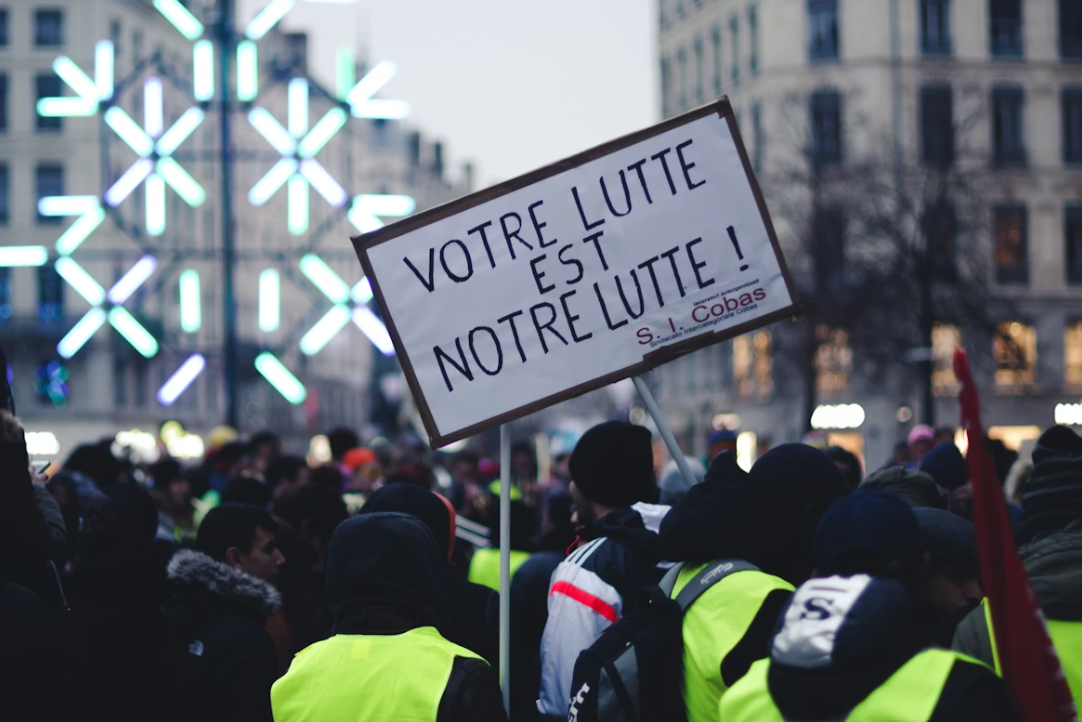
Understandably, this choice would not be met with applause from the attentive public, especially in a nation known for its proclivity for protest in response to insufficient government decision-making. A new threat imposes itself in front of the Élysée, a déjà vu echoing through the catacombs of the French territory: could it signify a rise in a new, greater movement, Gilets Jaunes 2.0?
Others, however, are not as convinced of this narrative, introducing new players – ones more lenient toward France’s response to their fiscal indiscipline (one being the ECB) – that would be first in line for rescue were an emergency state to be announced. This cushion could mean the stakes are not high enough to corner France into reverting to the former choice and would instead be met with further defiance in Parliament, with the number of new Prime Ministers soon jumping to double digits. If countering policies are meant to increase investor confidence, defiance would deepen their skepticism. Higher yields on government bonds would be required to keep investors at bay, heightening borrowing costs and tightening the ribbon around fiscal pressures. As time went on, investors would drop like flies, searching for countries with both safer and more lucrative prospects.
The threat is clear, a perfectly elaborate trap. The political crisis creates an economic crisis, and the solution guarantees a greater political disaster than we have seen thus far; a Prisoner’s Dilemma is at play. And the players? No one has more to win or lose than the French population, which is entirely at its government’s mercy.