
M&A Frenzy, Geopolitics, and the Race for Critical Minerals
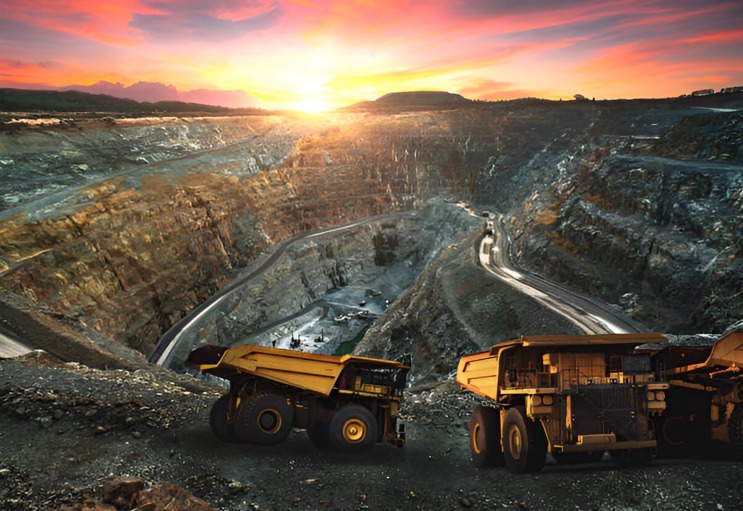
In recent years, the metals and mining (M&M) sector has undergone unprecedented structural changes influenced by geopolitical trends, heightened demand for critical minerals, and uncertainty over sustainability goals. Supply chain disruptions and changes in the regulatory environment require a complete re-strategizing of operations. Special interest from private and public actors has been placed on the future of strategic metals which are critical to renewable energy such as lithium, nickel, and other rare earth elements.
Industry Trends and Deal Flow in 2025
The M&M industry in 2025 was characterized by accelerated consolidation, strategy realignment, and operational reshaping. While overall M&A activity decreased in 2024, the first three quarters of 2025 demonstrated a powerful revival, especially in large-cap transactions focused on critical commodities. Global M&A deal value reached $40 billion in Q3 2025 alone, representing a 46% YoY increase. This sharp resurgence in M&A activity is fueled by the energy transition, pressure on supply chain management, and a rise in protectionist government policies. As a result, M&A activity has accelerated as firms use acquisitions to respond to the energy transition demand.
The control of mineral resources by governments is tightening with more protectionist measures being implemented. Resource-rich countries are realizing the significance of strategic metals to their own economies and are restricting exports as a result. The Indonesian government’s ban on the export of raw nickel, for example, forces firms to invest in domestic refining, while Canada has also restricted foreign investment in its lithium resources and redirected their flow of lithium to domestic electric vehicle (EV) supply chains. This increased focus on protectionism will encourage more partnerships, likely in the form of joint ventures or collaborative agreements, as opposed to the pursuit of outright mid-market acquisitions. These production structures often reduce regulatory scrutiny in domestic resource development without triggering political backlash and ownership restrictions against companies headquartered outside the country of development.
The evolving use of renewable energy sources and EVs is increasing the demand for lithium, nickel, and copper; elements that are critical in the production of solar panels, wind turbines, and electric battery manufacturing. With this surge in demand, mining firms are increasing their production capacity and improving extraction techniques. Demand for lithium is forecasted to triple by 2030, driven by its central role in battery storage. At the same time, copper faces a growing risk of supply shortages unless production increases meaningfully, as demand continues to rise faster than new capacity can be brought online. This outlook, which promotes higher commodity prices, saw a sharp increase in strategic acquisitions as large cap mining companies prepare for future supply demands through forward-thinking M&A tactics.
In terms of investments, there has been a shift in the dynamics of capital formation in 2025. Although private equity (PE) deal flow decelerated in 2024 following a five-year high, institutional investors continue to deploy capital into critical mineral assets and ESG-aligned operations. According to EY, the mining industry will have to invest an estimated $2.1 trillion by 2050 to meet clean energy mineral demand. This forecast has challenged companies to rebalance their portfolio strategies to focus on securing natural resources essential to clean tech development and expansion in the future. While decarbonization remains a priority, firms are balancing emissions goals with the practical need to ramp up raw material output to enable the global energy transition.
Mining companies are also investing in automation, artificial intelligence (AI), and other digital technologies to improve operating efficiency and reduce costs. AI-powered predictive maintenance is reducing the downtime of machinery, while automation is boosting the safety of workers in hazardous environments. Technological advancements in mineral processing are also facilitating the treatment of lower-grade ore, which makes previously non-viable deposits economically attractive, which in turn leads to an expansion of profit margins, driving further expansion in the industry.
As a result, 2025 saw the emergence of strategic portfolio reshaping: mining companies are divesting from legacy carbon-intensive assets while strategically increasing capital allocation to commodities essential for future-facing minerals. This has positioned M&A as a growth lever by mitigating risk and drive transformational change, enabling firms to respond to geopolitical uncertainty, ESG compliance pressures, and long-term demand trajectories.
Major M&A Transactions in 2025
In 2025, various landmark acquisitions have occurred that have significantly impacted the M&M industry, demonstrating the sector’s concerted efforts toward strategic growth and the acquisition of critical resources. Companies are streamlining operations for better supply chain effectiveness and taking advantage of the soaring demand for metals. The most prominent deals include:
Rio Tinto's Acquisition of Lithium Arcadium – At the start of 2024, the Australian lithium producer Allkem and the American chemicals conglomerate Livent closed their $10.6 billion merger, creating the leading vertically integrated lithium producer globally, Arcadium Lithium. Eight months later, Rio Tinto expanded its lithium portfolio by acquiring Arcadium Lithium for $6.7 billion, reinforcing its commitment to supplying the growing battery metals market. This acquisition enhances Rio Tinto’s position as a key supplier of lithium for the EV industry by vertically integrating its lithium supply chain, allowing for greater control over production, cost efficiencies, and supply stability.
Anglo American and Teck Resources Merger – In September 2025, Anglo American and Canada’s Teck Resources announced a merger valued at approximately $53 billion, creating one of the world’s largest copper producers. This strategic combination enhances Anglo American’s exposure to high-quality copper assets, reinforcing its role in the global energy transition and lowers unit costs for extraction.
Northern Star’s Acquisition of De Grey Mining – In May 2025, Northern Star resources completed its $3.25 billion acquisition of De Grey Mining, consolidating one of Australia’s largest undeveloped gold projects. The deal significantly boosts Northern Star’s production pipeline and positions the firm as a leading player in the global gold mining sector.
Outlook in 2026 and Beyond
The M&M sector is projected to undergo further transformation, driven by market demands related to geopolitical instability and green concerns. The prominent mining companies are increasingly consolidating as well as investing in downstream processing to ensure their own market supply chains are secure from geopolitical risk. At the same time, operating across multiple jurisdictions exposes multinationals to political uncertainty, regulatory shifts, and state intervention. Mines in politically volatile regions, such as parts of Africa and Latin America, face higher premiums for political risk insurance and require robust contingency planning to manage potential government actions or instability. Due to the rising demand for critical elements, companies will seek to create secure supply routes through long-term deals and strategic partnerships that can buffer the impact of nationalization risks, export restrictions, or policy reversals.
Sustainability issues are expected to remain a key consideration in many jurisdictions, though ESG momentum has become increasingly fragmented across regions. In the U.S., ESG-related regulations have been scaled back under the Trump administration through executive rollbacks and the appointment of officials who deprioritize environmental oversight. Despite this, a lot of mining companies will not abandon ESG and reinforced their commitment to pursue responsible mining production. Regions like the European Union continue to advance aggressive ESG agendas, with regulators demanding greater accountability on carbon emissions, water usage, and biodiversity impact. Financial incentives and capital inflows in these jurisdictions continue to favor ESG-aligned mining projects, prompting firms operating there to prioritize sustainable practices despite global policy divergence.
Geopolitical tensions are expected to stay relevant as states adopt stricter regulations for foreign ownership of mineral assets. The U.S, Canada, and various European countries are fast-tracking domestic mining projects to reduce dependence on mining supply chains from China and Indonesia, leading to increased investment in North America and Europe.
Technological developments will be critical to enhance operational efficiency, reduce costs, and improve working conditions. The application of AI in exploration efforts is likely to speed up the search for new mineral deposits, thus increasing availability of resources. With mining companies increasingly embracing technology, the sector will be primed for increased productivity and data-driven decision-making.
As the major players in the industry continue to strengthen their market positions, invest in technological integration, and adopt sustainable strategies, it is likely that 2026 will be marked by the acceleration of consolidation of firms through mergers as well as strategic partnerships in the sector. Companies able to ride these emerging trends through a strategy centered around strengths of their core assets, acquisition of high-quality targets, technological innovation, and responsiveness to regulatory changes, will be best placed to thrive in an environment with limited resources.