The Price of the Final Frontier: What a SpaceX IPO Would Really Mean
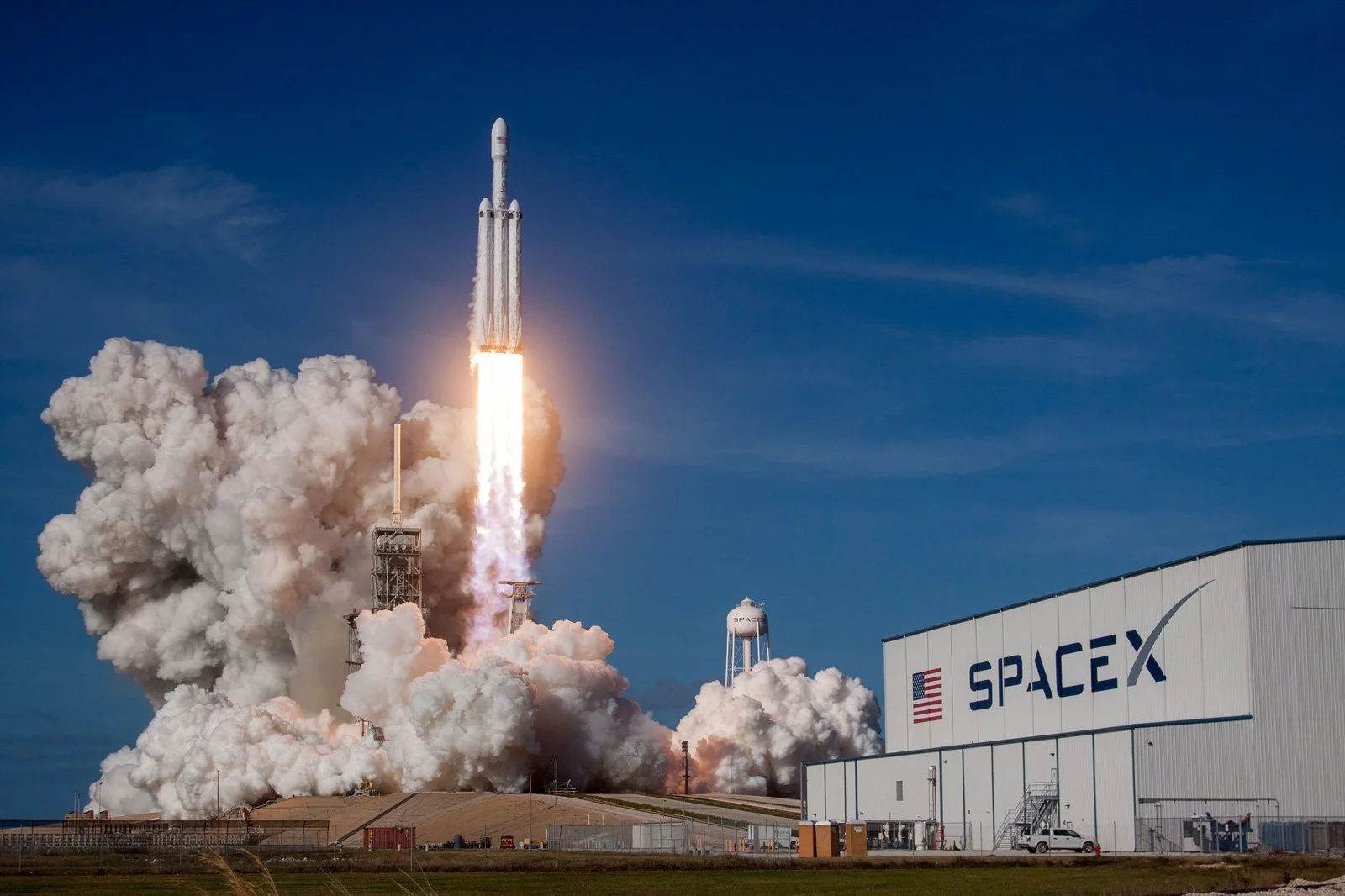
In 2002, one of the most speculative companies in the 21st century was founded in California by Elon Musk, SpaceX. The company was ahead of its time, with the core goal of lowering the costs of space travel and building the infrastructure for a Mars colony. In the decades since, SpaceX has turned into one of the biggest private space travel and telecom companies. The company has been an industry trailblazer, accomplishing feats such as building the Falcon 9, the world's first reusable rocket. The business model has proven to be very reliable, largely fueled by high-profile government contracts, commercial satellite launches, and Starlink satellite internet services for all corners of the Earth. As of late, Musk and the SpaceX team have found reason to dip into the public equity markets to fund the company's ambitious projects, whose demands are rapidly exceeding their available capital.
Why IPO Now?
One of the driving factors for this IPO is capital expenditures for putting AI data centers into space. This advancement must be made to sustain long-term AI infrastructure with solar power, as the finite energy and land on Earth are exhausted. However, potentially the most significant factor is the development of Starship, the first completely reusable rocket in all facets of space travel. Starship already exists in a premature form, but eventually it will be built to send humans to the moon as a part of NASA's Artemis program, and eventually to Mars, at scale. SpaceX has projected that the IPO will raise $30B, and value the company at $1.5T, potentially topping the largest IPO in history, when Saudi Aramco (2222.SR) raised $29B, valuing the oil giant at $1.5T.
Since the founding of SpaceX, many companies have built large ties to the company, standing to gain much from this anticipated high-volume IPO. Some of these companies include EchoStar (NASDAQ: SATS) who sold $17B of wireless spectrum licenses to SpaceX's Starlink for 50-50 cash and equity, STMicroelectronics (NYSE: STM) who is a key supplier of chips for Starlink satellites, Alphabet (NASDAQ: GOOG) who has a 6-7% stake in SpaceX, and Bank of America (NYSE: BAC) who invested $250M in SpaceX as a part of a financing round in 2018.
Going forward, there are a few crucial elements to consider with this IPO: although the hype is enormous and interest from retail and institutional investors will come in droves for another Musk-led venture, can long-term growth and returns be assured? A SpaceX IPO will have a monumental impact on how public markets value space transportation and the technologies pushing humanity toward its final frontier: interplanetary colonization.
What Makes this IPO Different
The SpaceX IPO of ~$1.5T is expected sometime in 2026, according to a leaked internal document from the company, potentially as early as June. Currently, the company is under a quiet period, a key step in the IPO process, turning rumours into tangible plans to go public. This comes after SpaceX filed an S-1 form with the SEC, an initial registration form for new securities. During this period, company insiders must not issue any forecasts or promotions in order not to inflate demand. It is important to note that the IPO is not for certain and could be cancelled due to issues with timing and terms. If this process continues smoothly, the market will potentially witness the biggest blockbuster IPO of all time, with some sources speculating a quick rise to a $2T valuation upon going public.
Funding from an IPO this large is perfect for the company tackling the issue of sustainable AI infrastructure and interplanetary colonization. It's clear that the AI economy is upon us, and SpaceX is looking to build the infrastructure that will remove the bottleneck of the few demanding AI data centers required for companies like Meta, Microsoft, and OpenAI. While the seemingly infinite real estate for these data centers in orbit solves the issue of building more data centers, SpaceX also wants to solve the issue of demand for energy via solar cell arrays, providing 24-hour access to solar power in a sun-synchronous orbit. Musk confirmed that this is a driving force for the IPO and told an audience at an event held by Baron Capital that data centers could be launched yearly with aggregate power consumption equal to 20% of annual usage in the USA. Some third parties are skeptical of these claims, pointing to several technological breakthroughs that must occur.
In addition, SpaceX is on the horizon of Starship advancements, which will be used to put these data centers in space and pilot interplanetary travel. Currently, SpaceX has the $4B contract for NASA's Artemis program and has an obligation to build a version of Starship that will land on the moon by 2027. Additionally, SpaceX must create the technology to refuel Starship in orbit, contributing to a seemingly infeasible timeline, putting stress on the company to innovate. If history is anything to go by, it is very possible that the Musk leadership present in SpaceX will allow them to meet these obligations, especially if supplemented by billions in raised capital.
The Financial Mechanics
Although the gargantuan IPO potential may appeal to certain investors, it also poses a few difficulties surrounding valuation. SpaceX is unlike many public companies and has an atypical array of services, including launch contracts, global satellite telecommunications, and frontier-pushing missions like colonizing Mars. It is possible to give a valuation based on revenue from launches ($4.2B in 2024) and Starlink ($8.2B in 2024), but how can you value future missions like launching AI data centers to orbit, or existential feats like expanding borders past Earth? These levels of novelty could cause valuation fluctuations upon a SpaceX IPO, and investors must be cautious.
A possibility has emerged that SpaceX may forgo the traditional IPO format for a tax-free and quicker route through a merger with EchoStar (NASDAQ: SATS). EchoStar provides satellite services for phones and TV and has a 2% stake in SpaceX from deals where SpaceX purchased wireless infrastructure. EchoStar has many valuable assets, like live streaming networks, and has ties to SpaceX, with its chairman being a past employee, offering high praise to SpaceX's business. This avenue to the public markets is unlikely, and SpaceX, newly registered with the SEC, has been hearing pitches from major US bulge bracket investment banks. Currently, Morgan Stanley is seen as the frontrunner, having close connections to Elon Musk through its role in taking Tesla public, as well as advising and leading the financing for his purchase of Twitter. The firms heading the underwriting of the IPO are still far from decided; however, a decision may be made within the next few weeks.
Risks, Controversies, and Investor Sentiment
One of the defining characteristics of SpaceX is its leadership, more specifically, Elon Musk. While some may be under the impression that Musk is an erratic personality and an inequitable leader, and some believe everything he touches turns to gold, smart investors will take from both schools of thought and look at the fundamentals of his leadership. Musk has only ever taken one of his companies public, EV producer Tesla (NASDAQ: TSLA). Tesla stock has faced volatility from Musk's public escapades like filter-less tweets, threats to leave over a pay package, and external activities like a short stint running the Department of Government Efficiency. Contrarily, Musk has an intense leadership style that involves being extremely present in operations, running operations extremely tightly, and constantly challenging the status quo. This passion and ambition translate to wildly successful companies. Musk's passion seems to run the deepest for SpaceX as he sees failure to achieve its goals as detrimental to humanity, advocating for the occupation of Mars frequently.
Another Musk-led company going public is sure to cause wild retail investor demand so as not to miss out on the next potential upside amid volatile share prices. Many perceive a SpaceX IPO as having success potential based on hype and speculation, even without the proven recurring revenue that SpaceX has had in the last 23 years. However, there is a caveat to be addressed with an initial massive valuation. Jay Ritter, a professor from the University of Florida, claims that out of 45 companies with initial valuations of $100M+ and initial valuations 40x higher than annual sales between 1980-2023, only 7 were trading higher three years later. This statistic details the reality that many high-profile IPOs cannot feasibly maintain their initial inflated valuations.
Additionally, a $1.5T valuation for SpaceX could potentially leave little headroom for future market cap improvement based on the largest companies today. Only 14 companies have ever achieved a market cap above one trillion dollars. For those hoping to capture the missed opportunity of investing in Tesla early, the SpaceX IPO may not be a perfect replacement. Although Tesla and SpaceX are both associated with Musk, Tesla debuted with a modest valuation of $2.2B, leaving room for improvement, compared to a potential chart-topping SpaceX debut of $1.5T. In this case, SpaceX growth investors will be banking on not only the development of innovative tech, but also trailblazing in capital markets with a ludicrous size.
Market Comparisons
Since its conception, SpaceX has redefined success in the aerospace industry, while also quietly becoming a telecommunications giant. Perhaps the most significant signal of this expansion is an investment from one of the largest tech companies, Alphabet (NASDAQ: GOOG). In 2015, Alphabet invested $900M into SpaceX when they were valued at $12B for a 7.4% stake, based largely upon speculation while Starlink was still conceptual. Since then, Alphabet has $8B in gains on that investment, and a $1.5T SpaceX IPO could make it worth $110B+ and one of the most valuable investments ever made by a public company.
A key driver behind these massive gains in Alphabet's investment is Starlink. Starlink has passed 8M subscribers worldwide from consumers and enterprises, and has been made much more scalable in the last few years with the introduction of the reusable Falcon 9. Starlink frames SpaceX as a massive telecommunications business where revenues are expected to reach $11B in 2025, and backing from other big tech companies gives them a prominent role in the tech market. Additionally, SpaceX has many similar competitors on the launch services side of operations. Companies like Rocket Lab (NASDAQ: RKLB) have also seen growing success in the last few years with the boom in launches and demand for satellites. Commercial launch companies are slated to have continued success from maintained demand; however, SpaceX separates itself from the competition with Starlink. Starlink adds a layer of depth and vertical integration to SpaceX that makes it unlike any other company in the aerospace industry.
Conclusion
SpaceX going public isn't just another IPO; it is an opportunity for the intersection of capital markets and the writing of history for mankind. Capital raised will go towards important advancements like the rapid increase of sustainable AI infrastructure and making humans interplanetary. A projected IPO valuation of $1.5T mirrors how inspirational and profitable this pursuit will be. However, the prospect of being a part of such a massive societal shift will inevitably create mass investor demand, and valuation is going to be a key factor in the future examination of this company.
In these monumental times, one must question: Does opening the final frontier to public markets democratize human advancement? Or does it tether our greatest ambitions to the logic of short-term returns?