What’s Mine is Mine: Inside The Sahel’s Gamble with Resource Nationalism
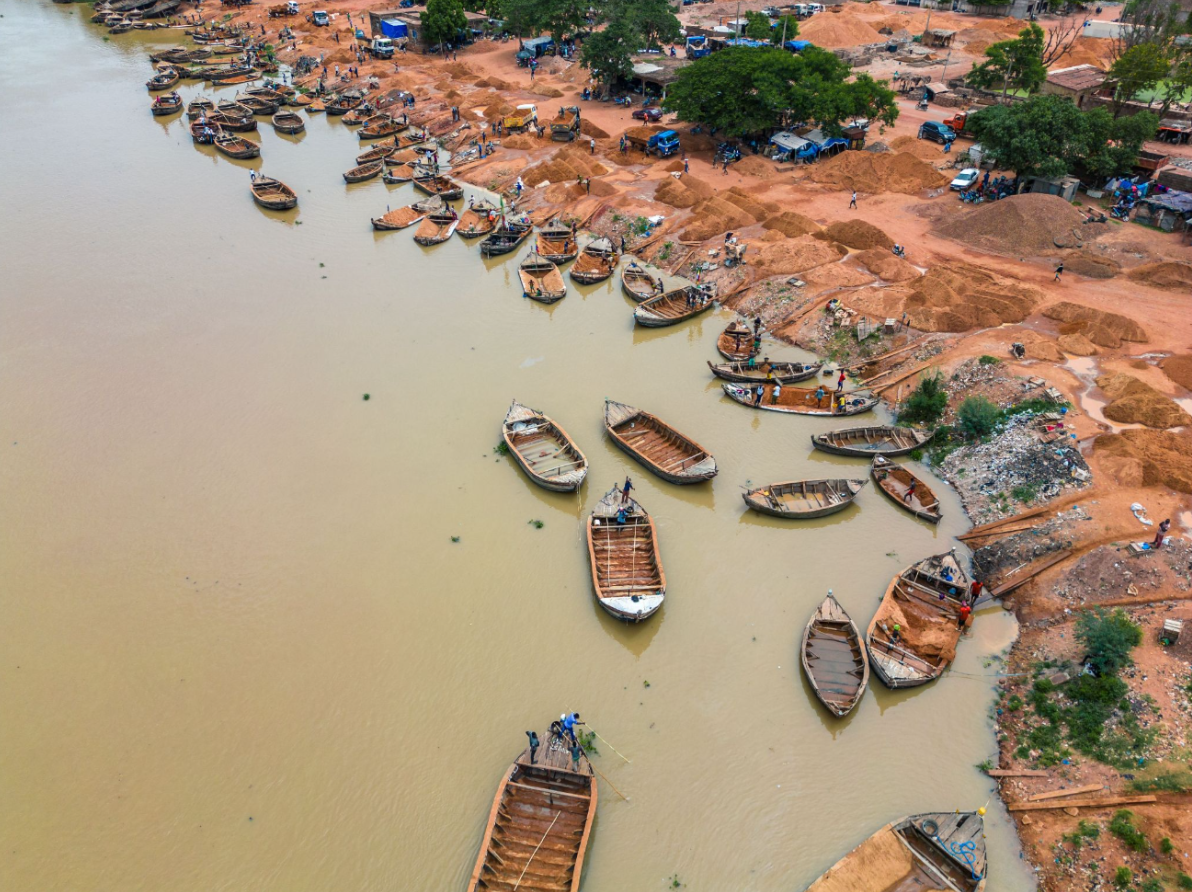
For years, the story of West Africa’s Sahel was told through coups, jihadist insurgencies, and the dramatic expulsion of French troops. Today, Mali, Niger, and Burkina Faso turned the page to foreign-run gold and uranium mines, as their military leaders seized greater control over their commodities. There are those who call it taking back national sovereignty; and those who call it plain expropriation. Neither label tells you much about what is actually behind the crackdown, or what it will cost these states in the long run.
A Uranium Mine at the Center of a Diplomatic Row
Consider Orano, a French state-affiliated nuclear energy group that has run uranium mines in Niger since 1971. In June 2025, the Nigerien military government announced plans to nationalize Somaïr—a mining company that operated the Arlit uranium mining complex in a joint venture with Orano—as the country accelerates its push for sovereignty over the extractive sector. To do so, Niamey revoked the 1968 Arlit uranium mining concession, effectively stripping the French company of its operational permit.
Notably, the Somaïr mine produced between 2,000-2,500 metric tonnes of uranium ore each year, and supplied a hefty 15% of France’s uranium imports. Wounded and with little room to maneuver, France triggered what became nothing short of a diplomatic crisis.
Yet for Niger, Somaïr was but another piece of evidence that the country faced the lower end of the bargain in its commercial relations with the West. Nigerien officials justified their actions by citing unpaid surface royalties, alleged pollution, and the company’s control over 86% of production, a share deemed disproportionate to Orano’s 63% stake in the venture.
No verdict in commercial or international arbitration courts is in sight yet, though what is clear is a setback on the already frayed diplomatic relationship between Niamey and Paris.
Mali’s Big Beautiful Bill As The First Domino To Fall
Niger’s case is fascinating not for what it did, but because it wasn’t the first, nor the last, to do so. In recent years, the policies enacted by several neighbouring countries in the Sahel region of Sub-Saharan Africa have been swayed by a push toward greater resource sovereignty, raising questions about the motives behind this trend and the implications that follow.
The story traces back to Mali, another former French colony. A 2023 revision of its mining code increased the state’s stake in mining projects from 20% to 35%. Upon further inspection, Bamako sought monetary compensation from Toronto-based gold miner, Barrick Mining, for what it saw as a skewed relationship that was overdue for renegotiation. Barrick previously held an 80% stake in the Loulo-Gounkoto complex, a mining site that, for reference, ranks among the top 10 global gold suppliers, with an estimated 723,000 oz of gold production in 2024 alone. Those reforms quickly ran into trouble, though, as they tore up the terms the Canadian firms had negotiated with the ousted government.
The dispute would eventually take a dramatic turn when Malian authorities issued arrest warrants for Barrick employees in late November 2024, prompting the mining company to bring its case to the World Bank’s International Centre for Settlement of Investment Disputes (ICSID)—marking the start of a conflict that was as protracted as it was legally messy.
The events that unfolded in Mali made their way into the forums of the Alliance of the Sahel States (AES)—a trilateral confederation of Burkina Faso, Mali, and Niger—where resource security had long been an item on their agenda. Critically, Mali’s dispute crystallized these political discussions into a coordinated commitment to expand state ownership of the most strategic commodities in each country: uranium in Niger, and gold in both Mali and Burkina Faso.
The Disenchantment of Western Partnerships
At the heart of this issue, the divorce between the AES and Western blocs brought the very anti-West policy framework characterizing mining reforms. The tension between both groups centered on two grievances that interacted with one another: Western failures to curb a rising regional insurgency, made all the worse by its colonial history in the region.
The first dealt with a matter of results. Western allies poured vast sums into the mounting insurgency of violent jihadist militants, only to watch security across the region deteriorate. To put that in context, at the time around the Mali-Barrick controversy, terrorist fatalities in Africa’s Sahel made up a staggering 43% of the global total, a figure that had been steadily rising throughout the Western presence. For people living through the violence, the West’s inability to restore order shattered its credibility.
The second explains why Paris bore the brunt of that frustration. As Dr Folahanmi Aina, an analyst based at SOAS University of London, writes: “The memory of French colonialism, defined by brutal military campaigns, forced labour, widespread repression, cultural erasure, racial segregation and forced displacement, is still very much alive in the Sahel region.” France was not resented because it led these counterterrorism efforts; it was precisely its legacy as a former colonizer that undermined its legitimacy.
Polling reflects this frustration as a widely-held view. A 2023 Afrometre survey finding 64% of Nigeriens explicitly disapproved of current foreign military intervention in security matters, while data compiled by the Institute of Economics & Peace (IEP) and the Integrated Crisis Early Warning System (ICEWS) identified that 59% of Malians maintained a negative view of France in 2023—a regional trend whose momentum only scaled with French military presence. Further evidence can be illustrated by the large public demonstrations sweeping across Bamako, Ouagadougou, and Niamey, calling for French troops to leave.
Motive 1: Inertia Rewards Domestic Politics
Resource nationalism emerged in the Sahel as a continuation of a new policy aimed at formalizing self-reliance. This new agenda, which highlights an overdependence on Western cooperation and treats these allies as uncommitted to genuine regional progress, is made all the more coherent when extended to resource security.
The intensifying anti-West sentiment was braced by the political rhetoric disseminated by coup leaders, who sought to—and successfully did so—turn that frustration into political capital. Once in power, the juntas—most visibly in Niger—repeatedly accused French President Emmanuel Macron of devising ongoing military intervention to impose neocolonial control.
Coup leaders deliberately fused opposition to the West with the idea of true national independence—promising freedom from foreign political, economic and military control. Before long, military rulers across the Sahel baked the anti-colonial message into state policy. By 2023, Captain Ibrahim Traoré and General Abdourahmane Tchiani—military officials from Burkina Faso and Niger, respectively—joined in announcing the end of military cooperation with France, following the same precedent set by Malian Colonel Assimi Goïta in 2022.
Political independence appeared to be an opening act. Existing mining contracts gave the juntas an easy political target. To an already skeptical audience, these deals readily lent themselves to accusations of paternalism and economic exploitation—a case military rulers happily pressed, arguing that the established terms abused the Sahel's mineral wealth to enrich the West. In their telling, it was just the latest chapter in a partnership filled with cheating and disappointments.
Overhauling state ownership over domestic commodities was offered as an emphatic remedy to these inequities, which could deliver on the junta’s anti-neocolonial campaign promises and reinforce a flimsy political backing at home. After all, a military regime already contending with diplomatic isolation may see domestic legitimacy as the vital asset needed to insulate it from further international interference.
The Ramifications of Self-Reliance
Crucially, the insight as to scarce diplomatic support is twofold. Monetary aid from the World Bank and Western donors fled the AES bloc as it became increasingly clear that the transitional governments were solidifying into hostile, entrenched military regimes. This dynamic carries evident fiscal implications.
In particular, fiscal gaps widened in the fallout of the Coup Belt. For Burkina Faso, the budget for the country’s developmental plan between 2023 and 2025 was slashed by 27% ($3.34 billion USD) after a sudden withdrawal of foreign aid in 2022—the same year the country underwent two historic coups d’état. Between 2019 and 2022—spanning Mali’s pre- and post-coup d’etat years—foreign assistance dipped by nearly 34%, a major blow to a country that previously sourced over 50% of its government expenditure through official development assistance (ODA).
The aid cuts landed at the worst possible moment for governments already fighting active insurgencies among other acute national emergencies.
Nowhere is that squeeze clearer than in Niger. Following the July 2023 coup, the World Bank froze disbursements for most programs in Niger—cutting off a lifeline for a state that held a $4.5 billion portfolio with the Bank, and relied on $600 million in direct budgetary support the previous. The freeze halted the Niger Adaptive Safety Net Project 2 (ASP2), a cash-transfer program reaching 66,000 of the country's poorest families. Since then, those households have had little to fall back on, undoing hard-won progress against extreme poverty.
Motive 2: You Can’t Run National Security on Empty
The sequence of fiscal shortfalls and mining reforms sheds light to a potential second reason.
Amongst all three countries, commodities dominate export revenues. Returning to Mali, Africa’s third-largest gold producer, raising state revenue was, in fact, the explicit mission of the mining revision, setting a target of 500 billion CFA francs ($803 million USD) to be added by the policy annually. Reports from the Extractive Industries Transparency Initiative (EITI) document an increase in the extractive sector’s share of government revenue, from 27.8% to 40.9% between pre- and post-reform years. More precisely, payments from mining companies to the Treasury rose from 547.6 billion CFA francs ($915 million USD) in 2023 to 835.1 billion CFA francs ($1.40 billion USD) in 2024, a 52.5% gain that Mali’s Ministry of Mines attributed mainly to higher taxation under the new code.
On first consideration, higher gold prices could explain part of this increase. Gold averaged $2,386/oz in 2024, up 23% from the prior year. Even so, in that exact time frame, Mali’s industrial gold production fell by 23%, from 66.5 to 51 metric tonnes, as disputes with foreign miners continued. Side by side, the gains in price were largely offset by the losses in output, leaving the value of Mali’s industrial gold at roughly the same 2023 baseline.
Admittedly, much of this climb was a one-time gain. The EITI accounts for 331.64 billion CFA francs collected in 2024 came directly from contract renegotiations, which is not a sum that will recur every year. Still, those renegotiations were themselves a product of the reform push.
Rewrite the rules to take a bigger cut of natural resources, and state revenues can go up. While juntas pitched their mining reforms as an empathetic need for sovereignty, the timing points to a simpler motive: they need the cash.
Behind the link between foreign aid cuts and sudden mining reforms sits a mounting human toll across West Africa, one too severe for any government to ignore. Much of the Sahel’s crisis goes underreported, even as food insecurity, forced displacement, climate change shocks, violent armed conflict, and extreme poverty rank amongst the highest levels in the world.
As Western cooperation decays, ordinary people across the region become further subjected to overlapping emergencies that all require the same thing to manage: money. Seen in that light, the push to seize larger stakes in lucrative mines is a plausible response to a pressing need for state funding.
Were the Reforms Fool’s Gold?
As Sahelian states assert greater ownership over natural resources, the trailing legal battles have added an additional cost to conducting business in the region. For foreign companies, political uncertainty quickly translates into costly legal settlements and asset write-downs—making future investors think twice.
During the Loulo-Gounkoto crisis, Barrick Mining suffered a steep $1.04 billion USD operational loss, a figure that does not include employee detention and other costs. Adding to the cost, the mining giant was forced to pay an additional $430 million USD settlement, along with an undisclosed amount of legal fees related to lawsuits in international and local courts.
Haggling over the new rules proved expensive for extraction companies, while also exposing a deeper political risk: if juntas could rewrite contracts once, what was to stop them from demanding even more later? The commitments outlined in existing government contracts lost weight, leaving foreign investors with one of two choices: demand a bigger upfront return, or take their money elsewhere.
The evidence suggests mostly the second. A clear example is offered by Endeavour, which envisioned an open-pit operation in its Kalana Project averaging about 150,000 oz of gold per year priced at $901/oz. Following Mali’s revised mining code, Endeavour’s CEO, Ian Cockerill, announced its plan to exit its assets in Mali after a $133.1 million accounting impairment on Kalana dampened the venture’s net returns.
Broader capital reallocation trends also show companies are wary of resource nationalism across these countries. Côte d'Ivoire drew $186 million of exploration spending in 2025, up 82% in a year when global exploration budgets fell for the third year running. In particular, Fortuna Mining is set to launch its $750 million growth and exploration strategy in West Africa, which explicitly excludes Mali from its investment and instead keeps its capital deployment in Côte d’Ivoire and Senegal—two established democracies in West Africa.
To be sure, new mining codes aren’t the only things scaring off investors. Deteriorating security already makes running large, multi-year mines in the Sahel a tough bet. Still, resource nationalism adds one more major deterrent for any company thinking about putting money into the Sahel.
The Sahel is Looking East
As the Sahel pulls away from the West, its military rulers are courting a new set of partnerships: Russia, China and the Gulf states. These partners seem much more palatable to domestic politics, at least compared to their Western counterparts, and are also willing to cut deals on the juntas’ terms.
China appears quite eager to make economic investments in the Sahel. In Mali, Ganfeng Lithium launched the first phase of its Goulamina project in December 2024 under the strict new mining code. Six months later, the mine shipped West Africa’s first-ever export of lithium concentrate. In Niger, the China National Petroleum Cooperation (CNPC) built a $7 billion, 1,950-kilometre pipeline to the coast of Benin. Prior to the project, landlocked Niger could pump just 20,000 barrels a day—all of which was burned locally; output has since leveled off at 110,000.
Similar bets are being placed by Moscow. In June 2025, Russia’s Yadran Group deployed a gold refinery near Bamako in which the Malian state holds a 62% stake. Once running, the plant intends to refine all of Mali’s industrial gold before export, bringing an end to decades of revenue lost to unprocessed and smuggled gold.
Even so, these new alliances face their own limits. For one, much of what has been announced remains on paper. Rosatom signed nuclear cooperation agreements with all three AES states in 2025, and Oman inked a gold mining joint venture with Burkina Faso that same year, though importantly remained in the early planning and investment stages awaiting construction.
Beyond that, new partners are also running into some of that same nationalist pushback that is driving out the West. In 2025, Niamey expelled three CNPC executives over local hiring and unpaid tax disputes. The standoff ended recently in May 2026, when Niger walked away with a 45% stake in CNPC’s pipeline subsidiary and brought export transit fees down from $27 to $15 a barrel. This was a win for Niamey, but a simultaneous reminder to any investor, Western or not, that contract terms in the Sahel remain subject to renegotiation.
No Guarantees
It may still be too early to determine whether resource nationalism will pay off for the Sahel in the long run. The early effects of the juntas’ mining and policy overhauls are already visible on the ground, but the full bill has yet to come due.
Watching Western capital walk out the door leaves the region with two compounding problems. The severance of international relations foregoes transformative economic opportunities in trade and international business that could improve regional material standards. Worse still, losing that money only tightens the financial strain on governments already fighting national emergencies—a strain that could spill over into the social welfare of the Sahel in ways that are hard to predict. If those pressures mount, they could easily wipe out whatever extra revenue the states collect from taking larger stakes in their mines.
New deals with Moscow, Beijing and the Gulf may help fill part of the economic void left by the West. Be as it may, those new relations are not guaranteed to entirely replace idle Western financial support, let alone bring total prosperity to ordinary citizens in the Sahel. Thus, whether Burkina Faso, Mali, and Niger can successfully lean on new partnerships to cushion the repercussions of their sovereignty push remains the region’s most consequential gamble.