Europe's Defense Supercycle: Why Markets Are Pricing a Political Bet They May Not Win
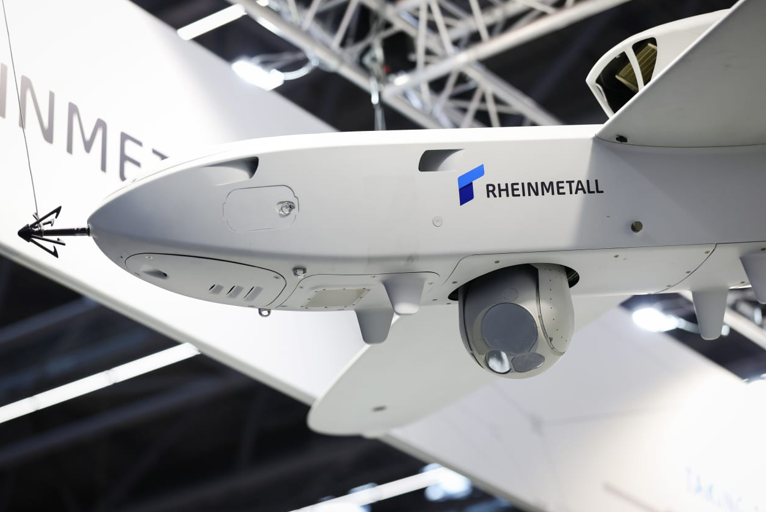
Shares in Rheinmetall, the German tank and ammunition maker, have returned roughly 900% over the past three years, placing the company on a higher forward multiple than most US megacaps. Sweden's Saab has added close to 200% over the past twelve months. The Goldman Sachs Europe Defense basket is up 18% year to date, and the Morningstar Developed Europe Aerospace & Defense Index has recorded its strongest start to a year since inception.
The repricing has gone well beyond a cyclical rally. Portfolio managers now treat European defense as a decade-long thesis, on the view that the continent has stopped outsourcing its security to Washington. The assumption beneath that thesis, is that the political coalitions currently funding rearmament will still be in office when the bills fall due.
The Trump Effect
The proximate driver is easy to identify. In the first week of January 2026, the United States captured Nicolás Maduro in a military operation in Venezuela, Donald Trump restated his intention to bring Greenland under American control, and the White House floated a $1.5 trillion defense budget for 2027. A 10% tariff on the eight European states backing Denmark's sovereignty over Greenland followed days later. European defense names advanced on each headline.
For investors, the read-through was structural rather than rhetorical. A United States that can casually threaten the sovereignty of a NATO ally is no longer a reliable underwriter of European security, and European governments will have to pay for their own defense. Rheinmetall has since given back 15-20% of its January highs, which underscores that durability is a thesis, not a price level. The more telling signal lies in the order books and in valuation multiples that continue to discount five to ten years of forward visibility. What markets are pricing is the assumption that no plausible successor to Trump rebuilds the security guarantee on the terms that prevailed before 2024.
Why the Market Believes this Time is Different
The conviction rests on more than geopolitical anecdote. At the NATO summit in The Hague in June 2025, allies committed to investing 5% of GDP on defense and security by 2035, split between 3.5% on core military expenditure and 1.5% on defense-related infrastructure. Germany has since reformed its constitutional debt brake. France, Italy and the UK have submitted credible annual paths to the target. Europe and Canada spent over $574 billion on defense in 2025, a 20% YoY increase and the largest single-year jump since the end of the Cold War.
The company-level evidence points in the same direction. Rheinmetall's order backlog crossed €64 billion at the end of Q3 2025, and management is guiding for group sales growth of 40 - 45% in 2026. Portfolio managers at Janus Henderson argue that the market still underappreciates the duration of the cycle rather than its magnitude, with several defense companies now valued on order-book visibility extending five to ten years rather than conventional annual guidance.
What the Market is Not Pricing
The valuations assume that the political coalitions currently funding rearmament will still hold a majority at the 2029 NATO review, through the interim procurement cycles, and at the 2035 target date itself. A ten-year fiscal commitment requires ten years of political continuity, and that continuity is eroding at the margin with every election cycle.
In France, the Rassemblement National won 24.86% of the vote in the 2014 European elections, its first nationwide victory in a four-decade history. It took first position again in 2019 with just above 23% of total votes. In June 2024, the list led by Jordan Bardella took 31.37% of the ballot, the first time since 1984 that any French list had crossed 30% in a European election. President Emmanuel Macron dissolved the National Assembly the same evening. In the snap legislative elections that followed, the RN and its allies secured more than 37% of the second-round popular vote, and the party's first-round vote count more than doubled relative to 2022.
Bardella now chairs Patriots for Europe, the third-largest group in the European Parliament, founded in July 2024 around Viktor Orbán's Fidesz. Most of its constituent parties are critical of continued military aid to Ukraine and advocate a negotiated settlement with Moscow. France's largest political force, which remains Europe's second-largest contributor to rearmament, therefore, leads a transnational bloc whose founding orientation cuts against the use of that rearmament.
The pattern extends beyond Paris. Spain has formally rejected the 5% target, securing a special exemption and capping its defense spending at 2.1% of GDP. The Alternative für Deutschland is climbing in state polls ahead of a series of 2026 ballots that will test Friedrich Merz's coalition. The ten-year commitment priced into European defense equity valuations runs through three French presidential cycles, two German federal elections and roughly eighty national votes across the European Union. The assumption that each returns a government committed to the Hague framework is not, on any reasonable reading, a null one.
The Trade Restated
The Euro rally, up 13% against the US Dollar in 2025 and its strongest annual performance since 2017, together with the compression in Bund spreads and the defense equity supercycle, form components of a single positioning: a collective wager on European political cohesion holding through 2035. The move has been supported by European fiscal stimulus led by Germany and by a broader wish to diversify away from the dollar, as the currency pushes towards $1.20. Even within the defense complex itself, sell-side consensus is starting to flag overvaluation: Saab trades above SEK 690 against an average 12-month price target around SEK 440, with Bank of America moving the stock to Underperform and Morningstar assigning a one-star rating at a fair value of SEK 490. The market and the analysts covering it are no longer telling the same story.
A long position in Rheinmetall at these levels rests on more than German fiscal capacity. It carries an implicit view on a specific political path, in which the pro-European majorities of the late 2020s survive into the 2030s. Although the outcome is plausible, the assumption remains a political one rather than an industrial one, and investors should be clear-eyed that this is the assumption they are making going forward.
None of this invalidates the broader bet on European defense. Trump has forced Europe into a structural posture that federalists spent seventy years failing to achieve, and a continent that finally pays for its own defense may prove his most consequential legacy. Yet the same shock accelerating rearmament is also accelerating the domestic political realignment that could eventually unwind it. Markets have priced the fortification of today's Europe. They have yet to price the electoral fragility of Europe.