Pax Canadiana: Carney’s Wager on the Decline of American Unipolarity
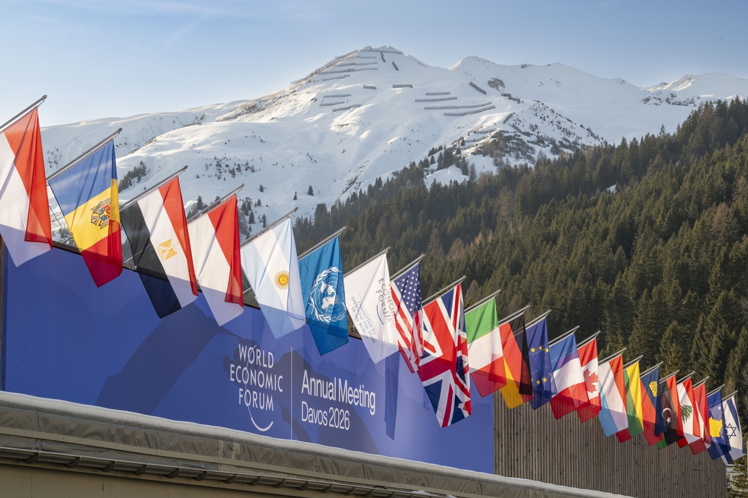
Of all the speeches delivered at the World Economic Forum in Davos earlier this year, few were showered with more acclaim than Prime Minister Mark Carney’s. In what may have been the most assertive projection of Canada’s foreign policy since its mid-century ‘Golden Age,’ he summoned a coalition of middle powers to resist the creeping re-feudalisation of the international order. Citing Thucydides, he rejected the reborn logic that “the strong do what they can, and the weak suffer what they must.” The reception was rapturous. Yet just weeks later, news of the U.S-Israeli bombing of Iran left Washington’s closest partners as blindsided as the general public. Beyond a delayed EU emergency briefing, there has been little visible coordination; if Carney claims the age of U.S. unipolarity is over, why does it seem so familiar?
The Unipolar Moment
The world Carney has inherited is starkly different from the one he entered at Goldman Sachs in the mid-1980s. At its peak, Pax Americana was deeply embedded within the postwar institutions Washington itself had constructed: the Bretton-Woods system anchoring the dollar at the center of global finance and NATO guaranteeing U.S. presence across the Atlantic. In fact, as Francis Fukuyama famously prophesized, liberal democracy was supposed to mark the “end of history.” Confident in its unrivalled position, the U.S. sought not merely to preserve this liberal order, but also to export it at gunpoint. That order is now buckling. Chronic debt, the rise of China, and withering domestic interest at remaining the world’s policeman have all but hollowed it out from within. For Canada, the consequences of this are not abstract. Sweeping tariffs under the second Trump administration have upended decades of integrated supply chains, whilst the USMCA – the agreement underpinning $1 trillion in annual trade – has been reduced to a “zombie agreement,” serving only to extract bilateral concessions from Ottawa and Mexico City.
The President Has No Clothes
In Carney’s vision for a multipolar world, the greatest rupture from the old order was semantic, a flat rejection of the “pleasant fiction” that the old rules-based order had ever truly been rules-based. The soft power language of freedom and liberalism, long used to dress up American interest, was to be retired in favor of pragmatism. Despite historic grievances with China over alleged foreign interference and Sikh-separatist tensions with India, Carney has eagerly pursued both, securing visa and trade deals with President Xi and landing in New Delhi just weeks after Davos. Strengthening his efforts at trade diversification also rests with middle-power solidarity, or else risk being “on the menu.” Indeed, his band of brothers is already taking shape; Carney is already brokering a trade bridge between the EU and the 12-nation CPTPP bloc, a multilateral framework spanning nearly 40 countries and covering 15% of global GDP, all whilst bypassing Washington. Much to the frustration of the White House, it has learnt that international institutions need not be voiceboxes for the powerful, but rather also compacts of shared rational calculation.
The Morning After Davos
Unlike earlier episodes of American isolationism, Carney confronts an ‘America First’ that remains curiously invested in multiple world theatres. The swift removals of Nicolás Maduro and Ayatollah Ali Khamenei this year have yielded results that, legitimacy aside, are difficult to dismiss. Whatever its relative decline in other domains, its capacity for military coercion endures, especially when it chooses not to consult others. Just as Bush invaded Iraq without UN sanction in 2003, so too was Carney caught off guard when bombs fell on Tehran. Worse still, the joint statement he issued with Foreign Minister Anita Anand stopped short of critiquing its legality. In doing so, Ottawa both deferred to Washington’s rationale and ignored the international legal architecture, including the Non-Proliferation Treaty and IAEA safeguards, to which Iran remains formally bound and that Carney had pledged to defend. As warned by Sandy Hollway, declaring the rules-based order a ‘fiction’ may do little more than license the hegemon, and a President already musing about Canada as the 51st state needs little encouragement. Moreover, for all the talk of diversification, the United States remains Canada’s largest trading partner by a large margin, a dependency felt most keenly with emerging Albertan separatists. The more Carney distances himself from Trump in rhetoric, whilst quietly acquiescing with him in practice, the less convincing his wager becomes.
Implications
The Canadian Prime Minister is not wrong to hedge his bets. Over two-thirds of the American public today believe their country’s global standing is waning, and the appetite for underwriting the international order has never been lower. Nonetheless, whilst a multipolar world may indeed be emerging, marked by the growing status of China and cooperation with rising middle powers such as India and Australia, Carney’s wager appears to conflate declining legitimacy with declining leverage. He must prove coherence within his coalition beyond shared irritation at Washington, but most importantly, he must decide whether he is building an alternative order or merely a bargaining option in the current one. His endorsement of the Iran strikes seems to suggest the latter.
There is little doubt that America’s leadership has grown ever more erratic. Yet recent realist relapses underscore a persistent truth: however frayed the rhetoric of the liberal order, U.S. defence spending still exceeds the next nine countries combined, and the greenback still comprises the majority of global reserves. For any ‘Pax Canadiana’ to succeed, it must therefore recognize that a hegemon in decline does not equate to a hegemon ready to be replaced. Until then, Thucydides seems to have followed Carney home from Davos.